Yoga props have revolutionized modern practice, making yoga accessible to practitioners of all levels and abilities. Whether you’re a beginner exploring your first downward dog or an experienced yogi deepening your practice, understanding how to use yoga props effectively can transform your experience on the mat.
What Are Yoga Props?
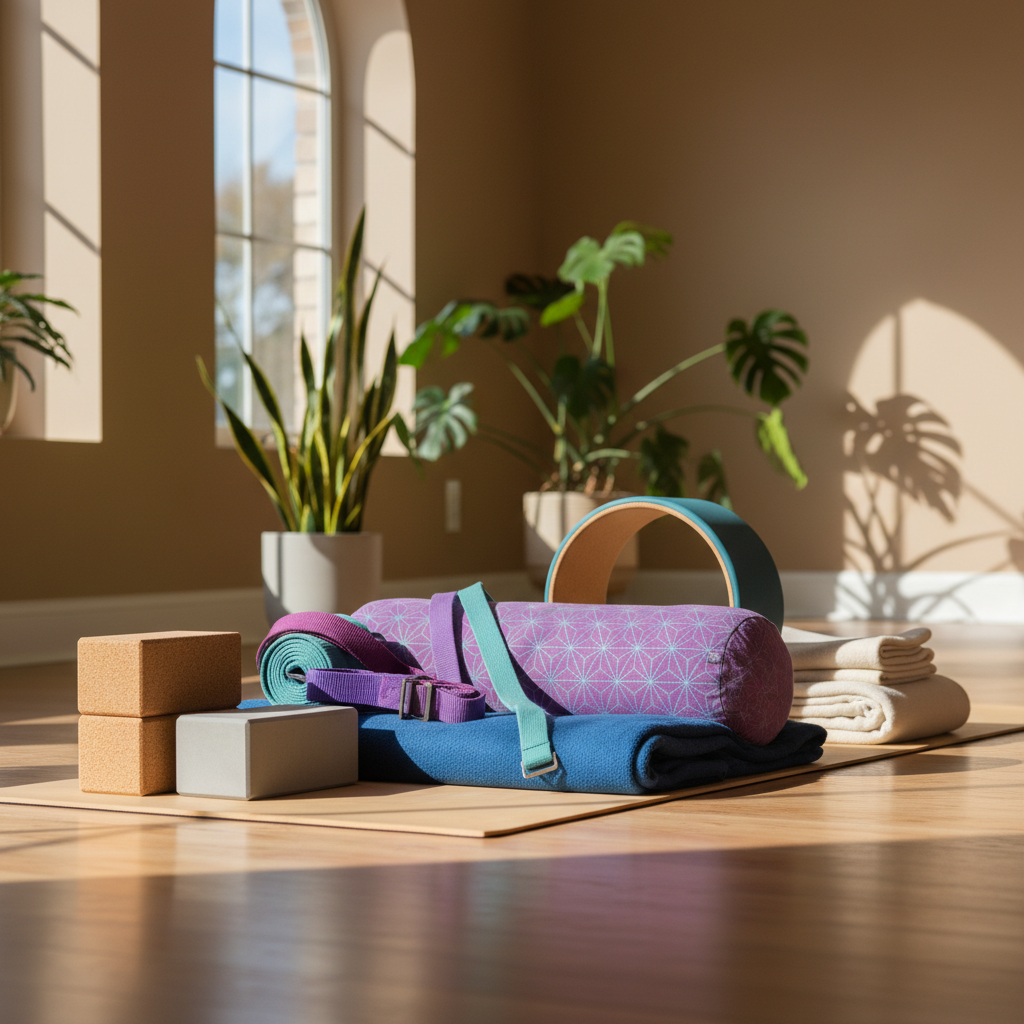
Yoga props are tools designed to support, stabilize, and enhance your yoga practice. Common props include yoga blocks, straps, bolsters, blankets, and yoga wheels. These accessories aren’t crutches—they’re intelligent tools that help you achieve proper alignment, prevent injury, and explore poses you might not otherwise access.
The Benefits of Using Yoga Props
Enhanced Alignment and Form
Proper alignment is crucial in yoga practice. Props help you maintain correct posture when flexibility or strength limitations might otherwise compromise your form. A yoga block under your hand in triangle pose, for example, allows you to keep your chest open and spine elongated rather than collapsing to reach the floor.
Injury Prevention
Using props reduces strain on joints and muscles, making your practice safer. They provide support where your body needs it most, allowing you to work within your current range of motion without forcing or overextending.
Increased Accessibility
Yoga props make the practice inclusive for everyone, regardless of age, flexibility, or physical limitations. They bridge the gap between where your body is today and where a pose requires you to be, making yoga truly accessible to all bodies.
Deeper Relaxation in Restorative Poses
In restorative and yin yoga, props are essential for achieving complete relaxation. Bolsters and blankets support your body so thoroughly that your muscles can fully release, allowing for deeper healing and stress relief.
Essential Yoga Props and How to Use Them
Yoga Blocks
Material Options: Cork, foam, or wood Common Uses: Balance support, flexibility assistance, and alignment aid
Yoga blocks are perhaps the most versatile prop. Use them in standing poses like triangle or half-moon to bring the ground closer to you. In seated forward folds, sit on a block to elevate your hips, making it easier to fold forward with a straight spine. Blocks also provide excellent support in arm balances and inversions.
Yoga Straps
Length: Typically 6-10 feet Common Uses: Extending reach and improving flexibility
Yoga straps are perfect for poses requiring you to reach your feet or clasp your hands behind your back. In seated forward fold, loop the strap around your feet to maintain length in your spine while working on hamstring flexibility. Straps also assist in shoulder opening exercises and binding poses.
Bolsters
Shapes: Rectangular or cylindrical Common Uses: Restorative poses and meditation support
Bolsters provide cushioned support for restorative practices. Place one under your knees in savasana to relieve lower back tension, or use it in supported child’s pose for deep relaxation. Bolsters are essential for restorative yoga sequences and prenatal yoga modifications.
Yoga Blankets
Versatility: Folded, rolled, or draped Common Uses: Cushioning, warmth, and elevation
Blankets serve multiple purposes—fold them to cushion your knees in tabletop pose, roll them to support your neck in shoulder stand, or place them under your sitting bones in seated poses. They’re also perfect for staying warm during final relaxation.
Yoga Wheels
Diameter: Usually 10-13 inches Common Uses: Backbends, balance, and myofascial release
The yoga wheel is a newer prop that helps deepen backbends safely, improve balance, and provide self-massage for tight muscles. Roll it along your spine for a gentle massage or use it to support deeper chest openers.
Incorporating Props Into Your Practice
For Beginners
Don’t hesitate to use props from day one. They’re not training wheels—they’re tools that help you learn proper alignment and build strength safely. Start with blocks in standing poses and a strap for seated forward folds.
For Intermediate Practitioners
Use props to explore variations and deepen poses. Try using blocks under your hands in crow pose to elevate yourself, or use a strap to work toward full king pigeon pose gradually.
For Advanced Yogis
Props help advanced practitioners refine alignment and explore subtle body awareness. They’re also valuable for maintaining a sustainable practice as your body changes over time.
Common Misconceptions About Yoga Props
Myth: Using props means you’re not strong or flexible enough. Truth: Props enhance everyone’s practice, regardless of level.
Myth: Props are only for beginners or people with injuries. Truth: Even advanced practitioners and yoga teachers regularly use props to deepen their practice and maintain proper alignment.
Myth: You should try to stop using props as you improve. Truth: Props are lifelong tools that evolve with your practice, not temporary aids to discard.
Choosing the Right Props for Your Practice
When selecting yoga props, consider quality and material. Cork blocks are eco-friendly and sturdy, while foam blocks are lighter and softer. Cotton straps are durable and comfortable, and natural fiber bolsters provide firm support.
Start with the basics—two blocks and a strap will serve most practitioners well. As your practice develops, add bolsters and blankets for restorative work.
Conclusion
Yoga props are invaluable tools that make yoga accessible, safe, and effective for everyone. They support proper alignment, prevent injury, and allow you to explore your practice more deeply. Rather than viewing props as assistance for limitations, embrace them as intelligent tools that enhance your yoga journey. Whether you’re holding your first warrior pose or perfecting an advanced arm balance, props help you practice with integrity, awareness, and self-compassion.
Remember, yoga is not about achieving picture-perfect poses—it’s about connecting with your body, breath, and inner awareness. Props help you do exactly that, meeting you where you are today while supporting your growth tomorrow.