
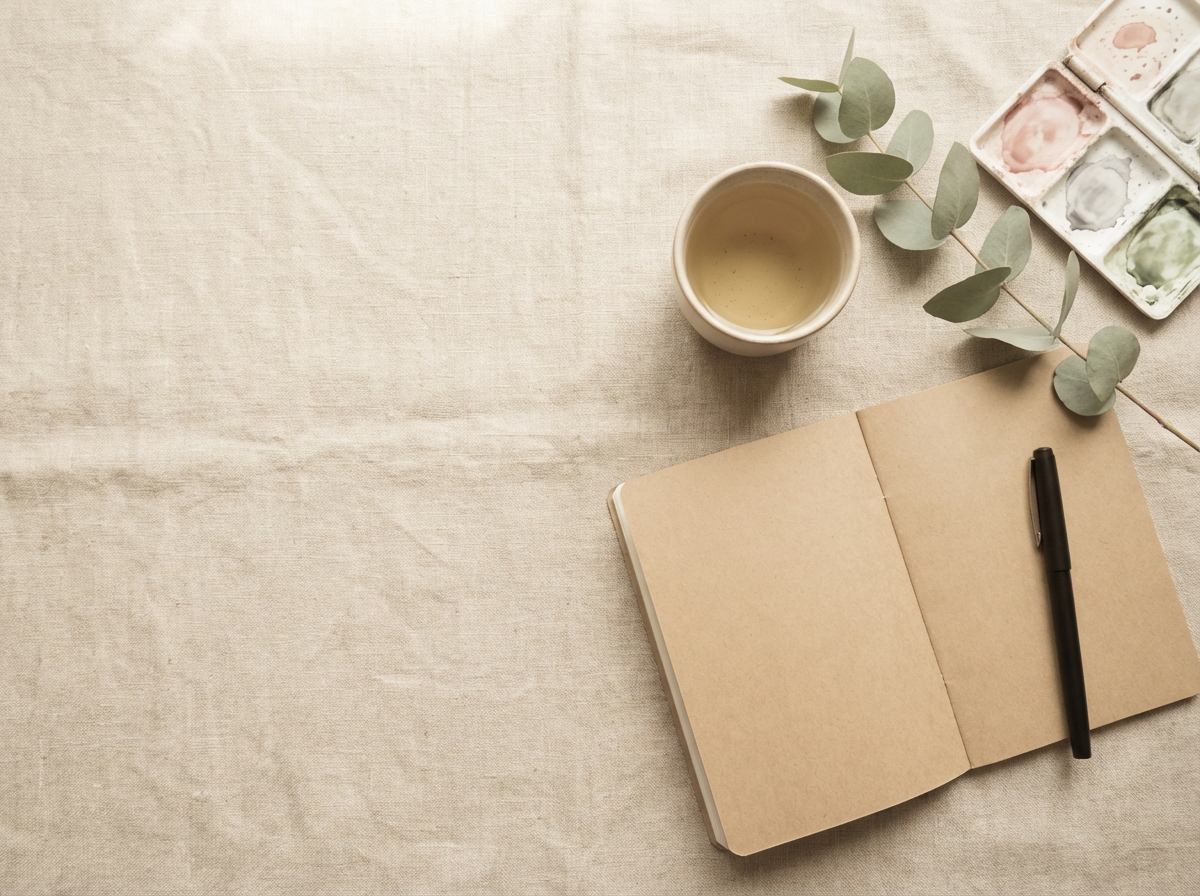
You don’t have to be “creative” to benefit from a creative workshop.
In fact, that’s exactly why I plan them into my retreats. When life is busy (and your brain is running 47 tabs), the last thing you need is another thing to be good at. What you do need is a gentle way to downshift, process what you’re carrying, and come home to yourself—without having to talk it all out or “figure it out” logically.
Creative workshops do that beautifully. And yes—there’s real research behind why.
What I mean by “creative workshop” (and what it’s not)
When I say creative workshop, I’m talking about simple, low-pressure practices like:
- Guided journaling prompts
- Reflection + intention setting
- Vision mapping (think: clarity, not hustle)
- Light collage, doodling, or painting (beginner-friendly)
- A “make something meaningful” moment that helps you integrate what you’re learning – like a bracelet
What it’s not:
- An art class
- A performance
- A competition
- A place where anyone critiques your work
You can keep everything private. You can participate quietly. You can do the “minimum” and still get the benefit. You can eve take the material home and do it privately.
The evidence-based benefits: why creativity supports wellbeing
Creativity isn’t just cute. It’s a nervous-system-friendly way to shift your state.
Here are a few evidence-based reasons creative practices belong in a wellness retreat.
1) Creative activities can reduce stress and support emotional regulation
When you’re making something with your hands—writing, drawing, collaging—your attention narrows. That shift in focus can help interrupt rumination (the mental replay loop) and create a calmer internal rhythm.
Research on art-making and expressive activities suggests they can support stress reduction and emotional processing. Not because the art is “good,” but because the process gives your nervous system a different job than worrying.
In retreat life, this matters. Many women arrive carrying months (or years) of “holding it together.” Creative practice gives the body and brain a softer way to release.
2) Creativity can create a flow-like state (hello, calm focus)
You know that feeling when you’re so absorbed in something that time gets quiet?
That’s often described as flow: a state of deep engagement that’s linked with positive mood and reduced stress. Creative tasks are one of the most accessible ways to enter that state—especially when the environment is supportive and the expectations are low.
A retreat is basically a flow-friendly container: fewer distractions, more nature, more space, and a schedule that supports you.
3) It helps you make meaning (not just “relax”)
Rest is important. But many women don’t just want to relax—they want to feel clear.
Creative reflection helps you connect dots:
- What’s been draining me?
- What do I actually need?
- What am I ready to let go of?
- What do I want to bring home from this retreat?
Writing and creative mapping can support meaning-making, which is a huge part of sustainable change. It turns a nice weekend away into something that actually follows you home.
4) It builds self-trust and self-efficacy
There’s something powerful about trying something new in a safe space.
When you create—even in a tiny way—you practice:
- Taking up space
- Making choices
- Being imperfect
- Finishing something
That builds self-efficacy: the belief that you can do hard things, learn, and adapt. And that belief is strongly tied to behavior change and resilience.
So yes, a simple creative workshop can quietly support your confidence—not in art, but in you.
5) Group creativity builds connection (and connection is health)
Retreats aren’t just about individual healing. They’re about community.
Doing a creative activity alongside other women (without pressure to perform) creates a specific kind of connection: relaxed, human, and real. It’s easier to talk after you’ve made something. It’s easier to feel safe when you’ve shared a gentle experience.
Social connection is consistently linked with wellbeing. So when we create together, we’re not “just doing crafts.” We’re building belonging.
Why creativity belongs in a retreat setting (not just at home)
Could you journal at home? Absolutely.
But most women don’t—because home is where the laundry lives, the notifications live, and the “I’ll do it later” lives.
A retreat changes the conditions:
- You’re away from your usual cues and responsibilities
- Your nervous system gets more quiet time (especially in nature)
- You have guidance, structure, and permission to slow down
- You’re surrounded by people doing the same thing—so it feels normal
That’s why retreats are so effective. They don’t just give you ideas; they give you the environment where those ideas can land.
How creative workshops complement yoga, nutrition, and nervous system work
I don’t add creative workshops randomly. They’re part of the whole retreat arc.
- Yoga helps you feel your body again. Creativity helps you integrate what you noticed.
- Nervous system education gives you language and understanding. Creativity helps you translate that into your real life.
- Gentle nutrition supports stable energy and mood. Creativity helps you clarify what you want your habits to look like—without the all-or-nothing mindset.
Think of it like this: movement opens the door, education explains the room, and creativity helps you rearrange the furniture in a way that works for you.
What it looks like at a Vital Living retreat
If you’re picturing glitter explosions and forced sharing—no.
My retreats are intentionally small, cozy, and grounded. The creative workshop is guided, calm, and designed to feel like a deep exhale.
You can expect:
- Simple prompts (I’ll lead you step-by-step)
- A warm, minimal setup (nothing complicated)
- Options to keep your work private
- Plenty of time—no rushing
- A focus on clarity, nervous system support, and “what do I need next?”
Women often leave with:
- A calmer mind
- A clearer sense of what matters right now
- A few practical next steps that feel doable
- That “I feel like myself again” feeling
If you’re thinking, “I’m not creative”… you’re exactly who it’s for
The most common sentence I hear?
“I’m not creative.”
And I get it. Many of us learned that creativity is for “talented” people. But creativity is a human nervous system function. It’s how we process, express, and adapt.
You don’t need talent. You need permission.
FAQs
Do I need to be artistic?
No. The workshop is designed for beginners and “non-artsy” people.
Is this art therapy?
No—this isn’t therapy, diagnosis, or treatment. It’s a guided wellness practice that supports reflection and regulation.
Do I have to share what I make?
Never. Sharing is optional.
Can I opt out?
Yes. You always get to choose your level of participation.
Want to experience it for yourself?
If you’ve been craving a reset—one that’s calming, evidence-informed, and genuinely doable—my retreats are built for exactly that.
Explore upcoming retreat dates on vitalliving.ca (or message me with questions). I’ll help you figure out if it’s the right fit.