
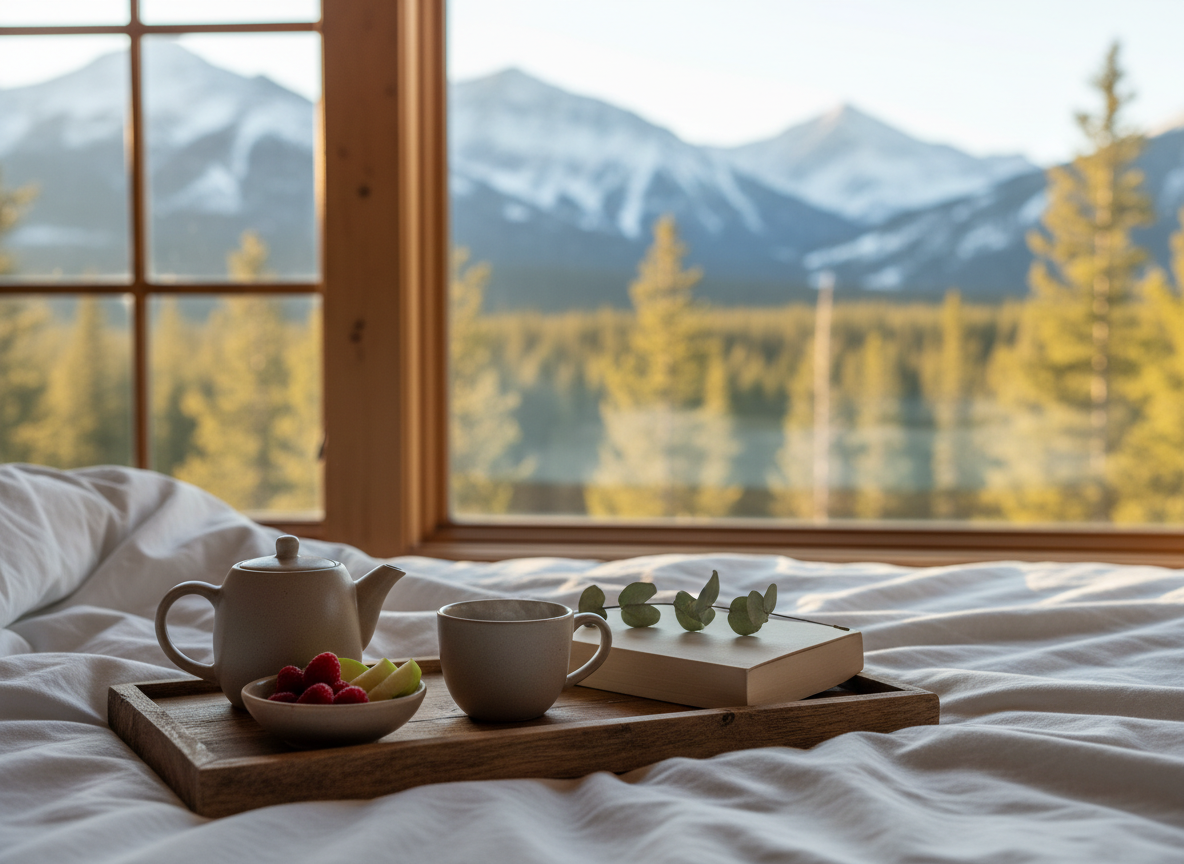
There’s a moment that happens on almost every retreat.
It’s usually not during the yoga class (although that helps). It’s not even the mountain view (even though, yes, it’s rude how pretty it is).
It’s the moment you realize: Oh. This is what it feels like to have space.
Not “I booked a day off but still answered emails” space. Real space. The kind where your shoulders drop without you having to remind them, and your brain stops sprinting for five seconds.
And then you go home.
And life is still life.
So the question becomes: How do you keep even a tiny piece of that retreat feeling when you’re back in your normal routine?
That’s where rituals come in.
Not big, complicated routines that require a new personality. Just small, repeatable anchors that tell your nervous system: We’re safe. We can slow down. We’re allowed to take care of ourselves.
Below are the rituals women most often “steal” from a weekend retreat and keep at home, because they’re simple, realistic, and they actually work.
Why rituals work (and why they feel different than habits)
A habit is something you do.
A ritual is something you do with intention.
Rituals are less about productivity and more about regulation.
They help you:
- Transition between parts of your day (work → home, busy → rest)
- Reduce decision fatigue
- Create consistency without rigidity
- Feel grounded even when life is loud
And the best part? They don’t have to take long.
1) The “no-phone” first 10 minutes
This one is spicy because it’s simple.
On retreat, you naturally spend less time on your phone. There’s less urgency. Less doom. More presence.
At home, try this:
- When you wake up, don’t touch your phone for 10 minutes.
- Drink water.
- Open a window.
- Sit on the edge of your bed and breathe.
That’s it.
Why it helps: your nervous system doesn’t get hit with instant input. You start the day from your body, not your inbox.
2) The “two-breath” reset (anytime, anywhere)
If you take nothing else from this post, take this.
When you feel yourself speeding up, snappy, overwhelmed, tight chest, racing thoughts, do two intentional breaths:
- Inhale through the nose.
- Exhale slowly (longer than your inhale).
- Repeat once.
You don’t need a meditation cushion. You don’t need to “clear your mind.”
Just two breaths.
Why it helps: longer exhales cue your body toward a calmer state. It’s a tiny signal that you’re not in danger.
3) A “warm drink” ritual (yes, it counts)
On retreat, there’s usually a warm drink moment, tea, coffee, broth, something cozy.
At home, make it a ritual:
- Choose one mug you love.
- Sit down while you drink it (even for 3 minutes).
- No multitasking.
Why it helps: warmth is regulating. And sitting down tells your body you’re not rushing.
If you’re a “drink coffee standing at the counter while scrolling” personthis is your gentle upgrade.
4) The “light + air” reset
Retreats feel good partly because you’re outside more. You get daylight. You breathe real air.
At home:
- Open a window for 2 minutes.
- Step outside for 60 seconds.
- Look at the sky.
Why it helps: daylight supports your circadian rhythm (sleep + energy). Fresh air and a visual horizon can calm the nervous system fast.
This is especially helpful if you’re in Alberta winter mode and your body forgets what the sun looks like.
5) The “one song” kitchen dance / shake-out
This is my favorite because it’s low effort and weirdly effective.
Put on one song and move. Not a workout. A shake-out.
- Roll your shoulders.
- Sway.
- Stretch your arms overhead.
- Let your jaw unclench.
Why it helps: stress lives in the body. Movement helps it move through.
If you’re searching for somatic exercises for stress but you don’t want it to be a whole thing this is it.
6) A 5-minute “tidy reset” (not a deep clean)
Retreat spaces feel calm because they’re simple. Less visual noise.
At home, pick one tiny reset:
- Clear the kitchen counter.
- Put shoes in one spot.
- Reset your living room pillows.
Set a timer for 5 minutes. Stop when it goes off.
Why it helps: your environment affects your nervous system. A small visual reset can feel like a mental reset.
7) The “balanced plate” anchor meal
Retreats also feel good because meals are steadier: you’re not skipping lunch and then eating random snacks at 9pm.
Choose one meal a day to anchor.
A simple template:
- Protein
- Plants (veg/fruit)
- Carbs
- Fat
No tracking. No perfection.
Why it helps: stable blood sugar supports mood, energy, and cravings. It’s hard to feel calm when your body is running on fumes.
8) The “soft landing” evening ritual
This is the ritual that makes the biggest difference for sleep.
On retreat, evenings are slower. Less stimulation. More wind-down.
At home, try a soft landing:
- Dim lights 30 minutes before bed
- Put your phone on charge outside the bedroom (or at least across the room)
- Stretch for 2 minutes
- Write down 3 things: what went well, what’s on your mind, what can wait
Why it helps: it tells your nervous system the day is over. You don’t have to keep scanning.
9) A “micro-ritual” for transitions (work → home)
A lot of stress comes from switching roles without a pause.
Try a transition ritual:
- Change clothes
- Wash your hands slowly
- Put on a playlist
- Take 10 breaths in your car before you walk inside
Why it helps: transitions are where your nervous system can either keep sprinting or start to downshift.
10) The “retreat question” check-in
This one is simple, but it’s powerful.
Once a day, ask yourself:
- What do I need right now?
Not what you should do. Not what you could do. What you need.
Sometimes the answer is water. Sometimes it’s protein. Sometimes it’s a walk. Sometimes it’s a boundary.
Why it helps: it pulls you out of autopilot.
How to make these rituals stick (without turning it into a project)
Here’s the secret: pick one.
Not ten. Not a full routine overhaul.
Pick one ritual that feels almost too easy. Do it for a week.
Then add another if you want.
Retreats work because they simplify life. Your at-home rituals should do the same.
If you’re craving the full-body exhale mountain air, beginner-friendly yoga, gentle nutrition, nervous system downshifting, and the kind of calm you can actually take home my Alberta mountain retreats are built for exactly that.
Check upcoming retreat dates and details here: Or message me your questions. If you’re not sure you “deserve” a retreat, we can talk about that too.