
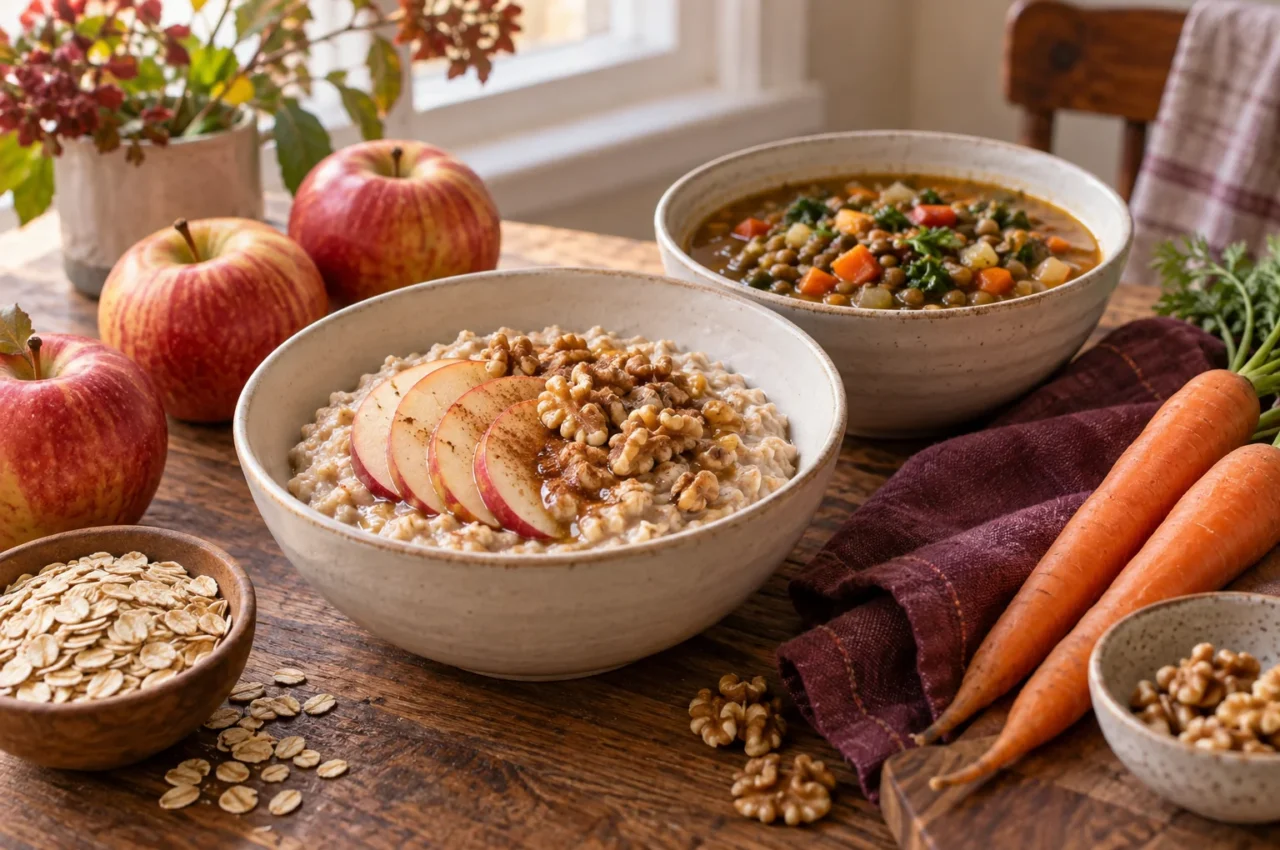
A bowl of apple-cinnamon oats. Lentils stirred into your favourite soup. A handful of nuts with an afternoon snack. Eating more fibre can start with small additions to meals you already enjoy.
As cooler mornings arrive and the calendar fills up again, familiar food can be a good place to begin. Here are five practical ways to bring more fibre to the table this fall, along with a few easy meal ideas to try.
What does fibre do?
Fibre is a carbohydrate in plant foods that your body does not digest. It can support bowel regularity, help lower blood cholesterol and help you feel full for longer. Different foods provide different types of fibre, so variety is useful. You can find it in vegetables, fruit, beans, lentils, whole grains, nuts and seeds. Health Canada explains fibre and its benefits here.
For this week, choose a change that fits your appetite, budget and routine. There is no need to turn every meal into a calculation.
1. Give your usual breakfast one small addition
Start with a breakfast you already like. Add chopped apple or pear to porridge, stir berries into yogurt, or serve fruit alongside your toast and eggs. Frozen fruit works well when fresh options are expensive or you want something that keeps longer.
For an autumn bowl, cook oats in your usual milk or fortified soy beverage, then add chopped apple, cinnamon and a few walnuts. Soften the apple with the oats if you prefer it cooked. Use a topping that suits any allergies or dietary needs.
2. Stir beans or lentils into a familiar dinner
A small spoonful of cooked lentils can be an easy place to start. Try them in tomato sauce, a vegetable soup or a casserole you already make. Canned beans and lentils are convenient: drain, rinse and add them near the end of cooking to heat through.
Keep the seasonings you enjoy. White beans work well with rosemary and tomato; chickpeas fit a gently spiced vegetable stew. Choose one combination before buying several unfamiliar ingredients.
3. Try a whole-grain version of one staple
Whole-grain foods generally contain more fibre than refined versions. Try whole-grain toast, brown rice or whole-grain pasta in a meal you make often. Canada’s Food Guide offers more ways to use whole grains.
If the texture is new to you, serve a small portion alongside something familiar. Check the cooking instructions, too: a different grain may need more time or liquid than your usual choice.
4. Make vegetables easier to reach
Choose one vegetable you enjoy and decide where it will fit. Put frozen peas beside the pasta, keep carrots ready for soup, or roast an extra tray of vegetables while dinner cooks.
An autumn tray might include carrots, squash and broccoli with a little oil and your favourite herbs. Cut firmer vegetables into smaller pieces so everything cooks more evenly. Serve some with dinner and refrigerate the leftovers promptly for another meal.
5. Build a snack from foods you enjoy
If you want a snack, try an apple with nut butter, a pear with a few nuts, or whole-grain crackers with hummus. Put the ingredients somewhere convenient so the choice is easy when your afternoon gets busy.
Pack a combination that travels well for your day. A whole piece of fruit and a small container of nuts need little preparation; hummus and cut vegetables need to stay chilled.
Three cosy meal ideas for the week
- Apple-cinnamon breakfast bowl: oats cooked with milk or fortified soy beverage, topped with apple and walnuts.
- Lentil and vegetable soup lunch: cooked lentils, carrots, tomatoes and greens simmered in broth, with whole-grain toast alongside.
- Roasted vegetable dinner bowl: brown rice, roasted squash and broccoli, and chickpeas, finished with a lemon-yogurt or tahini dressing.
These are starting points, so adjust ingredients and portions to suit you. Repeating the meal you enjoyed most is a perfectly useful plan.
Give your digestion time to adjust
Adding a lot of fibre at once can bring gas or bloating. Increase it gradually and drink fluids regularly, especially water. Toronto Public Health recommends this gradual approach. Start with one small addition and notice how you feel before adding more.
If you have been advised to limit fibre, have a digestive condition, or follow a fluid restriction, ask your dietitian or healthcare professional how to adapt these ideas.
Your one small step this week
Finish this sentence: “This week, I will add ______ to my ______.”
It could be pear with breakfast, lentils in Thursday’s soup, or vegetables beside a favourite sandwich. Put the ingredient on your shopping list, or use something already in your kitchen.
Last week’s gentle September reset was about making everyday routines easier. Let this be the next small step: one familiar meal, with a little more nourishment.