
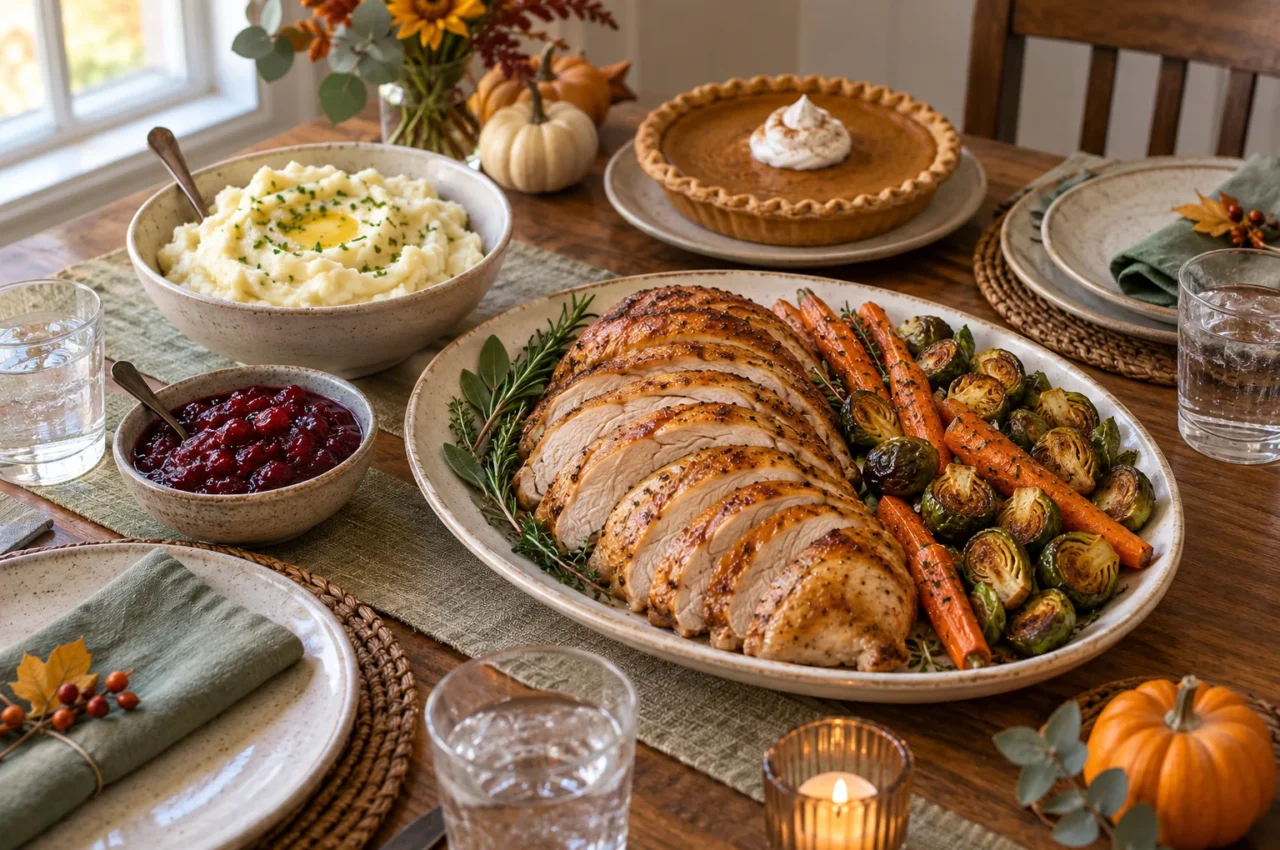
Thanksgiving can bring a table full of favourite foods, a kitchen full of people, and plenty of opinions about what everyone should eat. If you are already thinking about whether you will be “good” around dinner, there is room for a gentler approach.
Eating well can include enjoyment, familiar traditions and time with other people. With Canadian Thanksgiving coming up on October 12, here are five practical ways to make the meal feel more relaxed while still caring for yourself.
1. Let enjoyment be part of the meal
Health Canada’s guidance for holidays and events recognizes the value of food traditions and eating with others. It also encourages enjoying foods without judgment.
Perhaps you look forward to your family’s stuffing, roasted squash, or a slice of pumpkin pie. You can appreciate those foods without describing yourself as “bad” for eating them. A useful question is: What would I actually enjoy today?
If food talk around the table becomes uncomfortable, a simple boundary can help: “I would rather enjoy dinner than discuss diets.” Then ask about someone’s autumn plans or the story behind a favourite recipe.
2. Add variety to the table
Canada’s Food Guide plate suggests roughly half vegetables and fruit, one-quarter whole grains, and one-quarter protein foods. It is a guide to proportions, not a prescription for how much every person must eat.
For a holiday meal, use it as inspiration when planning the menu. You might serve turkey or a lentil dish, a grain side, and several vegetables. There is no need to measure every part of a mixed dish or turn a celebration into a calculation.
- An easy vegetable side: Roasted carrots and Brussels sprouts with olive oil and herbs.
- A grain dish to share: Brown rice with parsley, roasted squash and lemon dressing.
- A plant-based main: Lentils with mushrooms and onions, served alongside your favourite seasonal sides.
Choose combinations that suit your guests and the time you have. Last week’s article on fresh and frozen vegetables offers useful options when washing and chopping everything feels like too much.
3. Give yourself time to notice the meal
Between passing dishes and checking the oven, it can be easy to rush. Health Canada recommends taking time to eat, including noticing flavours, enjoying conversation, and paying attention to fullness.
Try one small change: sit down to eat, put your phone away, or pause between helping yourself and returning for more. Notice whether you are still hungry, comfortably satisfied, or ready for a break. This is an invitation to pay attention, not another rule to get right.
If the meal happens in a noisy house with children and interruptions, a few unhurried bites still count. The aim is to experience your dinner, not perform a perfect version of mindful eating.
4. Make hosting a little easier
A welcoming meal does not require every dish to be homemade. Choose the foods you most want to prepare and simplify the rest. A store-bought dessert, a vegetable dish brought by a guest, or a smaller menu can leave more time to sit with everyone.
Before shopping, ask guests about dietary requirements. Keep ingredient packaging available and discuss any allergy or cross-contact needs directly with the person concerned. Avoid guessing that a dish is suitable because it appears to be dairy-free or gluten-free.
You can also plan something easy to share beyond dinner: a card game, a conversation over tea, or an optional stroll if the weather suits. Let the day have room for connection as well as cooking.
5. Make a plan for leftovers
Put containers out before serving so packing food away is straightforward. According to Health Canada’s leftover safety guidance:
- Refrigerate leftovers promptly in shallow containers. Discard cooked food left at room temperature for more than two hours.
- Eat refrigerated leftovers within two to three days, or freeze them for later.
- When reheating, use a food thermometer to check that leftovers reach 74°C (165°F). Bring soups, gravies and sauces to a rolling boil while stirring.
For another meal, try turkey and vegetable soup, a lentil-and-roasted-vegetable bowl, or a turkey sandwich with crunchy vegetables on the side. Label what you freeze so it is easy to find later.
A small plan for this weekend
Pick one thing that would make Thanksgiving easier: a simpler menu, a dish you are excited to eat, or someone to help with the kitchen. Let nourishment and enjoyment share the table.