
If you’ve ever tried to “eat healthy” and somehow ended up with:
- A calculator
- A food scale
- Three different apps
- And a low-level fear of bananas
Same.
And here’s the thing: tracking macros can be useful for some people, in some seasons. But for a lot of women (especially the busy, high-functioning, already-carrying-a-lot women), it turns meals into math.
And I don’t know about you, but I’m not trying to add homework to lunch.
So this is the method I use (and teach) for balanced meals without counting macros. It’s simple, flexible, and it works in real life—whether you’re cooking at home, grabbing something on the go, or eating at your friend’s house where the only vegetable is a pickle.
Why balanced meals matter (without the diet culture vibe)
When I say “balanced,” I’m not talking about perfect.
I’m talking about meals that help you feel:
- Steady energy (not a spike-and-crash situation)
- Satisfied (so you’re not snack-hunting 45 minutes later)
- Clearer mentally (hello, afternoon brain fog)
- Better digestion (less bloating drama)
- Less intense cravings (because your body isn’t in panic mode)
Balanced meals are one of the easiest ways to support your nervous system too—because your body regulates better when it’s not running on fumes.
The simple plate method (no tracking required)
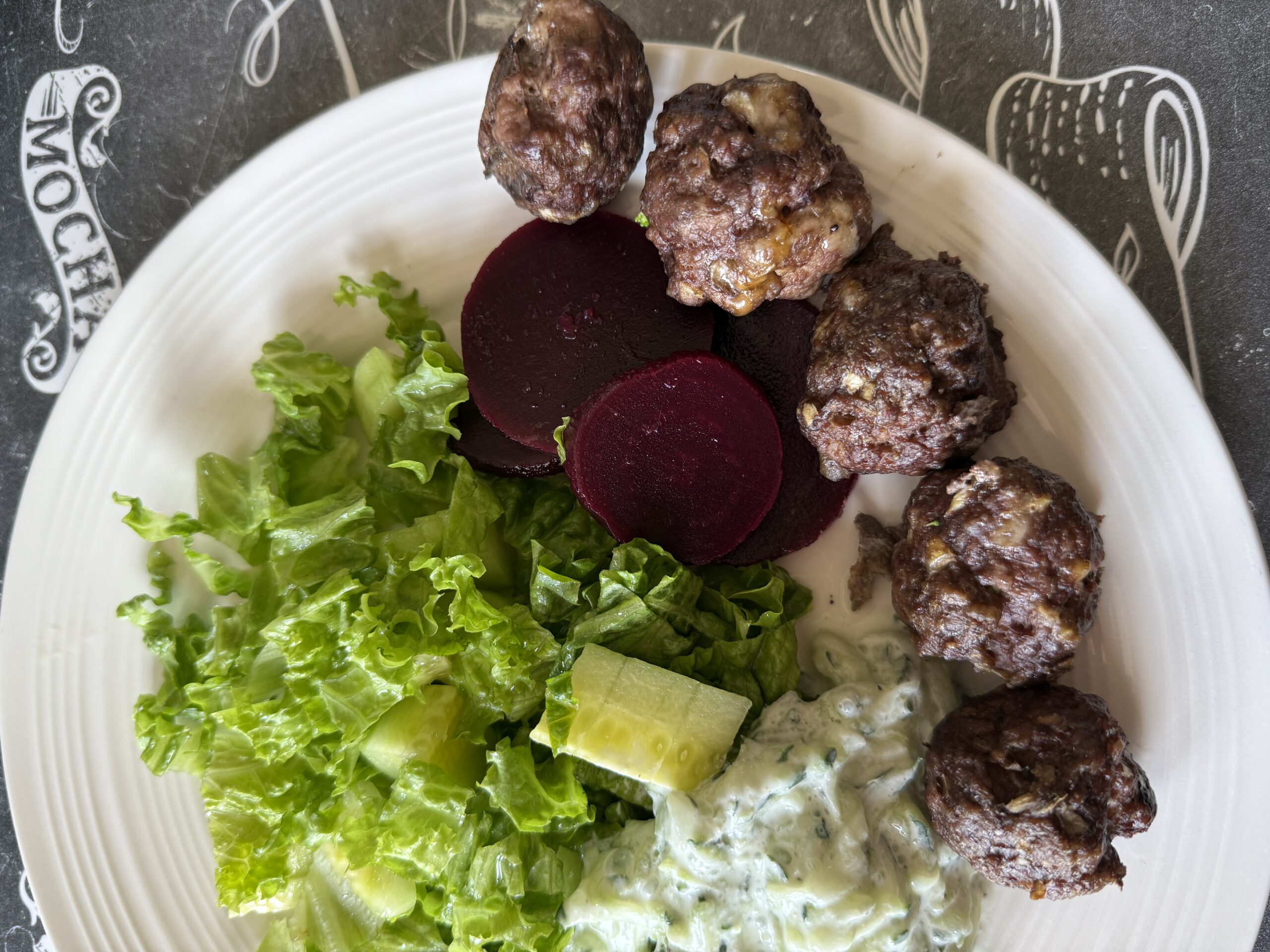
Here’s the basic template:
- 1–2 palms of protein
- 1–2 fists of colorful plants (veg + fruit)
- 1 cupped hand of carbs (more if you’re active, stressed, or in a higher-demand season)
- 1–2 thumbs of fat
That’s it.
Not because your hands are magical measuring tools—but because it’s a quick visual that keeps you out of the weeds.
And yes: this is flexible. If you’re tiny, your “hand portions” are smaller. If you’re taller, more muscular, pregnant, training, or just hungrier, your portions are bigger. Your body isn’t a spreadsheet.
1) Protein: the “steady energy” anchor
Protein is the piece most women under-eat—especially at breakfast and lunch.
When you get enough protein, you’ll usually notice:
- Better satiety
- Fewer cravings later
- More stable mood/energy
- Easier time building/maintaining strength
Easy protein options:
- Eggs, Greek yogurt, cottage cheese
- Chicken, turkey, fish, beef
- Tofu, tempeh, edamame
- Lentils, chickpeas, beans
- Protein powder (if it helps, not because you “should”)
If you’re thinking, “I’m not a big meat person,” totally fine. You can still hit a balanced plate with plant proteins—just aim for a bit more volume.
2) Plants: not for punishment—just for support
Plants bring fiber, micronutrients, and digestion support. They also help with fullness without you needing to micromanage portions.
This can look like:
- A big salad (with enough protein and fat so it’s not sad)
- Roasted veg
- Stir-fry veggies
- Fruit on the side
- Frozen veg when life is chaotic
And no, you don’t need 12 different colors per meal. Sometimes “plants” is literally baby carrots and a handful of berries. We’re not performing.
3) Carbs: yes, you’re allowed
Carbs have been through it in the wellness world.
But here’s the honest truth: a lot of women feel better when they stop treating carbs like a moral issue.
Carbs support:
- Energy
- Thyroid function
- Training and recovery
- Sleep (especially if you’re wired at night)
- Nervous system regulation
Carb options that play well on a balanced plate:
- Potatoes, sweet potatoes
- Rice, quinoa, oats
- Whole grain bread/pasta
- Fruit
- Beans/lentils (they count as carbs and protein)
If you’re active, stressed, perimenopausal, or sleeping poorly, you may do better with more carbs than you think—especially earlier in the day.
4) Fat: the satisfaction factor
Fat helps meals feel satisfying and keeps you full longer. It also helps you absorb fat-soluble vitamins.
Easy fats:
- Olive oil, avocado
- Nuts, seeds
- Nut butter
- Cheese
- Salmon
If your meals feel like they “should” be enough but you’re still not satisfied, adding a little fat is often the missing piece.
What this looks like in real meals
Here are a few examples (no perfection required):
Breakfast
- Greek yogurt bowl: Greek yogurt + berries + granola/oats + chia/flax + nut butter
- Egg plate: eggs + toast + avocado + fruit
- Oatmeal that actually holds you: oats + protein (Greek yogurt or protein powder) + berries + nuts
Lunch
- Big salad that isn’t sad: greens + chicken/tofu + quinoa + olive oil dressing + seeds + fruit
- Wrap: turkey/tempeh + hummus + veggies + side of fruit
- Leftovers: protein + roasted veg + rice/potatoes (underrated queen)
Dinner
- Stir-fry: beef/tofu + mixed veg + rice + sesame oil
- Sheet pan meal: salmon + potatoes + broccoli + olive oil
- Taco bowl: ground turkey/beans + rice + salsa + avocado + lettuce
The “if-then” guide (because life isn’t consistent)
Use this like a gentle troubleshooting tool:
- If you crash at 3pm: add more protein at breakfast and lunch, and don’t skip carbs.
- If you’re hungry an hour after eating: you probably need more protein and/or fat.
- If cravings feel loud at night: check if you under-ate all day (very common).
- If digestion feels heavy: keep fiber steady, hydrate, and choose cooked veg sometimes (raw isn’t always the answer).
- If you’re always “starting over Monday”: your plan is probably too strict.
What about snacks?
Snacks aren’t a failure. Snacks are a tool.
If you need one, aim for protein + fiber or protein + fat:
- Apple + peanut butter
- Greek yogurt
- Cheese + crackers + fruit
- Protein shake + banana
- Hummus + veggies + pita
This keeps your energy steady and prevents the “I’m fine… I’m fine… I’m starving” situation.
The most important part: consistency over perfection
The plate method works because it’s repeatable.
Not because you do it perfectly every time.
Some meals will be more balanced than others. Some days you’ll eat like a Pinterest board. Some days it’ll be toast and vibes.
You’re not failing. You’re living.
If you want a gentle goal, try this:
- Aim for 1 balanced meal per day for a week.
- Then 2.
- Then most meals, most days.
That’s how this becomes sustainable.
Want help making this work for your life?
If you want balanced meals without tracking—built around your schedule, your preferences, and your actual hunger cues—I can help.
Start with this plate method for a week and notice:
- energy
- cravings
- digestion
- mood
Then we can adjust from there.
If you want, tell me what a typical day of eating looks like right now (breakfast/lunch/dinner + snacks), and I’ll show you exactly where to tweak it—no macro math required.