
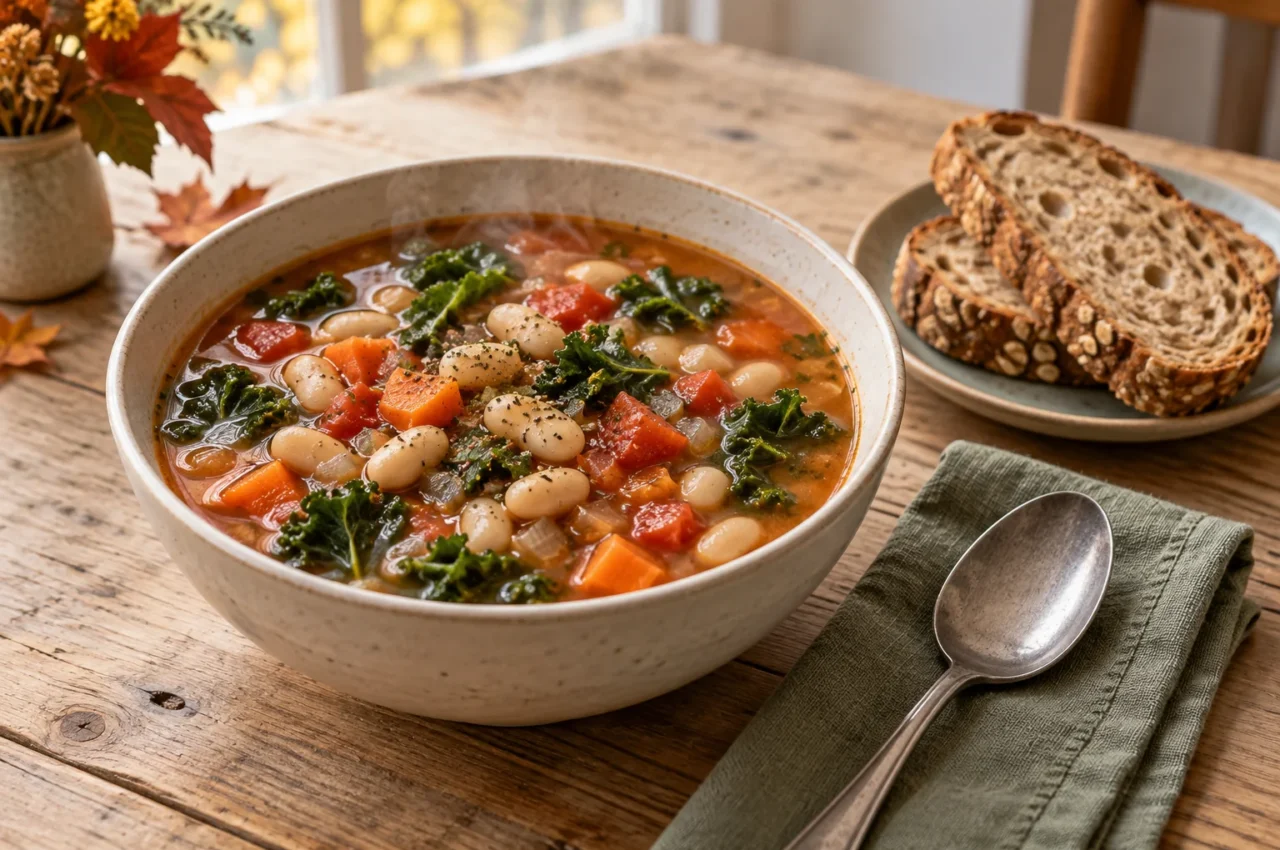
A warm bowl of soup is an easy choice on a cool autumn evening. But sometimes a light broth or a small bowl of vegetable soup leaves you looking for something else soon afterwards.
To make soup a more substantial meal, look at what is in the bowl and what you serve alongside it. A protein food, vegetables and a grain or other starchy food give you more to work with than broth alone. You can use this approach with homemade soup, a supermarket carton, or ingredients already in your fridge.
Start with a protein food
Canada’s Food Guide includes beans, lentils, tofu, eggs, fish and poultry among protein foods, and encourages choosing plant-based options more often. For soup, the practical question is simple: which one would work with the flavours you already have?
- Add rinsed canned white beans to tomato or vegetable soup.
- Stir cooked lentils into a squash or carrot soup.
- Use tofu cubes in a ginger and vegetable broth.
- Add safely stored cooked turkey or chicken to a vegetable soup.
Beans and lentils also provide fibre. If they are new to your routine, begin with an amount you find comfortable rather than suddenly adding a large serving. Our guide to eating more fibre this fall offers other small additions.
Include something substantial alongside the vegetables
Cooked brown rice, barley or whole wheat pasta can give a brothy soup more substance. Or keep the soup as it is and serve whole grain bread alongside it. Bread does not need to be an afterthought or something to apologize for.
Health Canada’s minestrone guidance suggests adapting soup with vegetables, cooked whole grains and protein foods such as beans. Think of that as a flexible combination rather than an exact formula.
Add cooked grains or pasta near the end, adjusting the liquid as needed. If you are using uncooked ingredients, follow a suitable recipe or their package directions; they need different amounts of liquid and cooking time.
Use vegetables that fit your week
You do not need a long shopping list. Carrots, chopped cabbage, canned tomatoes, frozen peas or leftover roasted squash can each be a starting point. Choose two or three that you enjoy together.
For a smoother texture, cooked squash or carrots can form the base. For a chunkier bowl, leave some vegetables in pieces. Health Canada also suggests blended soft tofu as a way to thicken soups.
If frozen vegetables make preparation easier, use them and follow their cooking directions. We explored their nutritional value in Are Frozen Vegetables as Healthy as Fresh?
Give the bowl flavour you look forward to
Try lemon with white beans, ginger with tofu, or smoked paprika with lentils and tomatoes. Herbs, black pepper and a little olive oil can finish a bowl without needing a complicated recipe.
When buying broth or canned soup, compare sodium using similar serving sizes. For canned beans, Health Canada recommends lower-sodium options or rinsing and draining them to reduce sodium. A convenient starting point can still become a meal you enjoy.
Three easy soup-meal combinations
These are adaptable meal ideas, not timed recipes. Start with cooked ingredients where specified and heat the finished soup thoroughly.
- White bean and tomato: Tomato soup with rinsed canned white beans and cooked kale, served with whole grain toast.
- Turkey and vegetable: Broth with safely stored cooked turkey, carrots, peas and cooked barley. Finish with parsley.
- Squash and lentil: Cooked squash soup with cooked lentils, cumin and a spoonful of plain yogurt or an alternative you enjoy. Add bread on the side.
Adjust the bowl and sides to your appetite. If you are still hungry, it is reasonable to have more. For a broader look at meal composition, see five ways to make meals more satisfying.
A quick note about leftovers
If you are using Thanksgiving leftovers, making soup does not make old or improperly stored food safe. Follow Health Canada’s leftover guidance: refrigerate promptly in shallow containers, discard cooked food left at room temperature for more than two hours, and use refrigerated leftovers within two to three days or freeze them.
Reheat leftovers to 74°C (165°F), checked with a food thermometer. Bring soups to a full rolling boil and stir. Reheat only what you plan to eat; Health Canada advises discarding uneaten leftovers after reheating.
Try one addition this week
Choose a soup you already like and add one thing it is missing: beans, tofu, cooked grains, vegetables or a side of bread. A few familiar ingredients can turn a light bowl into a meal that works better for you.