
You have finished dinner, put the dishes away, and somehow you are already looking for something else to eat. Was the meal too small? Are you craving something sweet? Or has a busy day finally caught up with you?
Still feeling hungry after dinner is worth getting curious about. It does not automatically mean you lack willpower, and wanting dessert does not, by itself, prove that your blood sugar has crashed. Meal size, food choices, routines and sleep can all be part of the picture.
Here are five practical, evidence-based places to start, with simple meal ideas for cooler evenings.
1. Check whether you have eaten enough
Before looking for a special ingredient to keep you full, look at the meal itself. A bowl of vegetable soup or a small salad can be delicious, but it may need a few additions to become a satisfying dinner for you.
Canada’s Food Guide plate suggests roughly half vegetables and fruit, one-quarter whole grains, and one-quarter protein foods. These are proportions, not a prescribed portion size. Health Canada explicitly notes that the picture does not tell you how much to eat.
Try tonight: Add lentils and whole grain toast to a vegetable soup, or chickpeas and cooked barley to a salad. Adjust the amount to your appetite. Think back over the day, too: did lunch happen, or did you get through the afternoon on coffee?
2. Include protein and fibre, without chasing perfect numbers
Protein and fibre-containing foods can help meals feel satisfying. Harvard’s overview of food cravings recommends including these foods for longer-lasting satisfaction. That does not mean every dinner needs a protein powder or an exact target.
Start with familiar foods: beans, lentils, tofu, eggs, fish or chicken for protein; vegetables, fruit, legumes and whole grains for fibre. Some foods, such as beans, contribute both.
Try tonight: Stir white beans into a tomato pasta sauce and serve it with whole wheat pasta and vegetables. Or add tofu to a vegetable stir-fry with brown rice. If you are gradually adding more fibre, last week’s five easy autumn fibre ideas can help you get started.
3. Notice whether you want more food or a particular flavour
Hunger and a craving can overlap, but they are not identical. You might want another helping of dinner, or feel comfortably full while still wanting chocolate. Cravings can also be associated with a familiar routine or setting, according to Harvard’s review.
Ask yourself: “Would more of my meal feel good, or is there something specific I would enjoy?” There is no pass-or-fail answer. You do not need to turn dessert into a test of discipline.
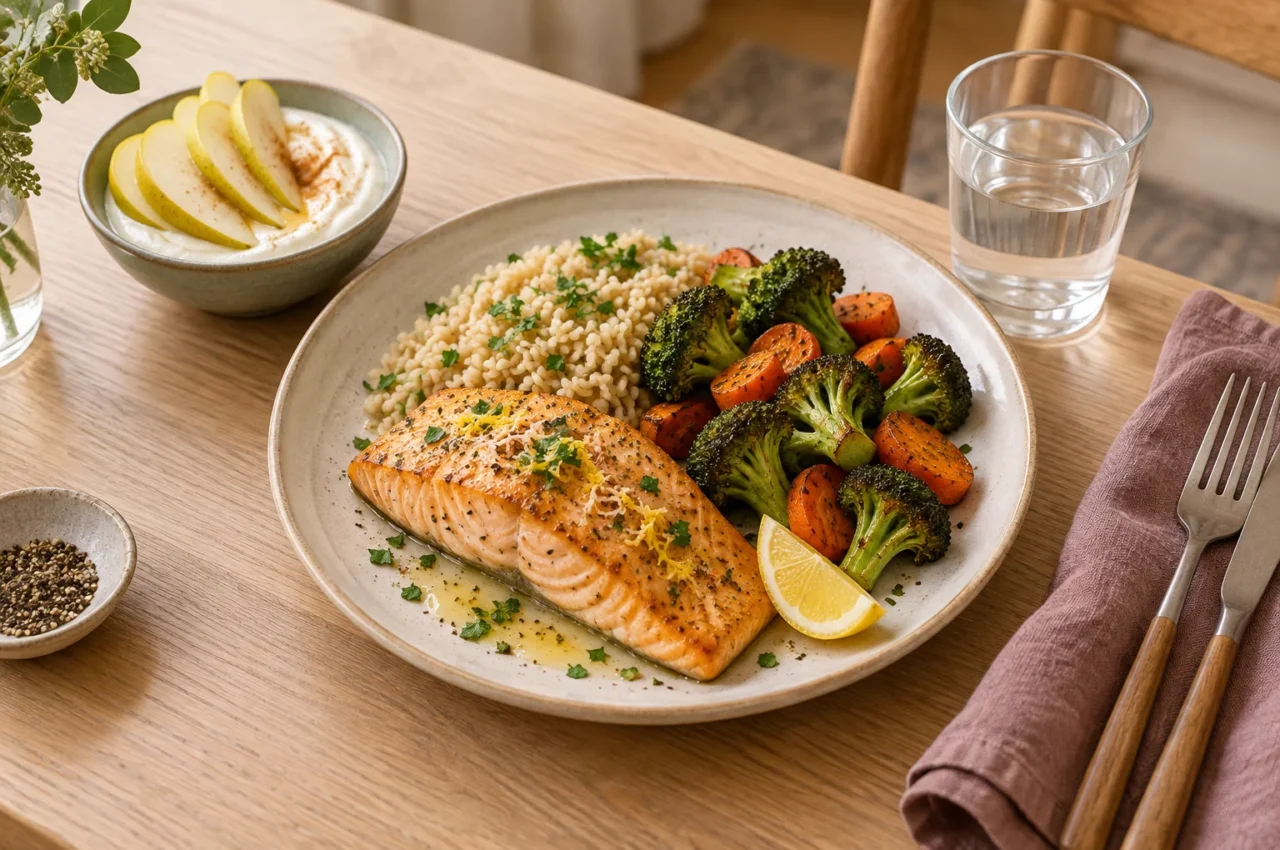
Try tonight: If you are hungry, have more dinner or a snack. If you want something sweet, choose something you enjoy and give yourself time to taste it. Pear with yogurt, baked apple with cinnamon, or a favourite dessert are all options. No single choice needs to carry the weight of your whole eating pattern.
4. Give yourself a chance to notice the meal
When dinner happens between messages, laundry and tomorrow’s plans, it is easy to miss the experience of eating. Health Canada recommends taking time to eat, because eating quickly can make it harder to notice fullness.
Try tonight: Sit down for the first few minutes of your meal with your phone out of reach. Notice the temperature, flavour and texture. Pause naturally and check how you feel. This is an opportunity to pay attention, not a rule that you must wait out hunger or refuse seconds.
5. Look at sleep and the kind of day you have had
Appetite does not exist separately from the rest of your life. A small randomized crossover study of 24 young adults found greater hunger and more energy eaten from snacks during a short period of restricted sleep. Total daily food energy intake did not differ between the sleep conditions. The study supports considering sleep; it does not explain every person’s evening appetite.
Health Canada also notes that stress, fatigue and your surroundings can influence hunger and fullness.
Try tonight: Notice whether this is a pattern after short nights or especially demanding days. Meet your need for food, and consider what else would help: a quieter evening, support with a task, or more opportunity to sleep.
Three easy dinners to build on this week
- A cosy bean bowl: roasted squash, white beans, barley and greens with lemon and olive oil.
- A simple tray dinner: salmon or tofu, roasted broccoli and carrots, and brown rice.
- A quick pasta night: whole wheat pasta, lentil tomato sauce and a side of vegetables.
These are starting points, not portion prescriptions. Use foods you enjoy and tolerate, and add more when you need it. For more meal-building ideas, see balanced meals without counting macros.
When hunger deserves a closer look
If increased hunger is persistent or unusual for you, speak with a healthcare professional, especially if it comes with unusual thirst, frequent urination or unexplained weight loss. These can be symptoms that need medical assessment. Feeling hungry after one meal is not a diagnosis.
For this week, choose one small experiment: make dinner more substantial, add a food you have been missing, or sit down long enough to enjoy it. Notice what helps you feel comfortably nourished.