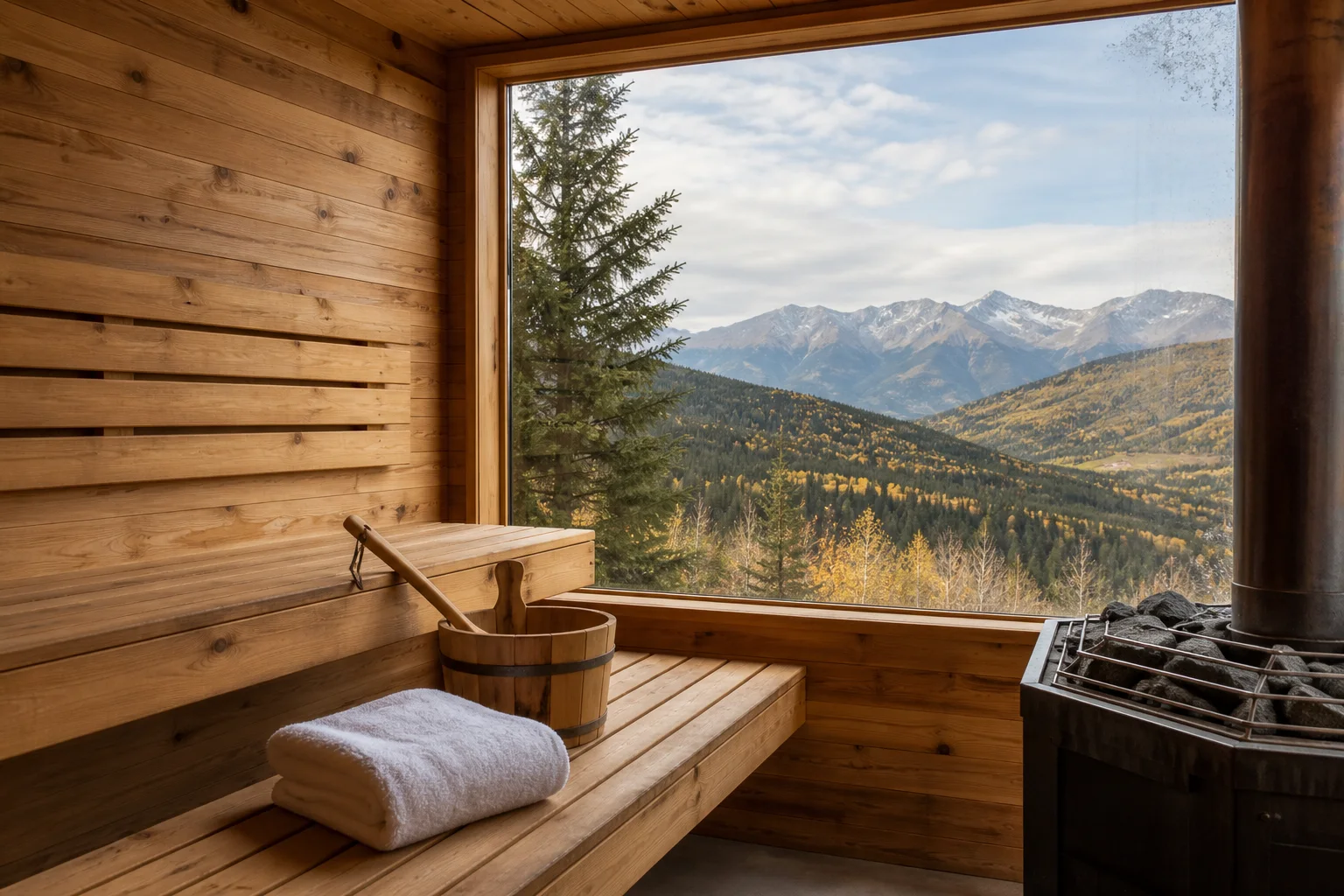
Step into a sauna after yoga and the contrast is immediate: movement gives way to stillness, conversation becomes quieter, and warm air asks you to slow down. That experience can feel deeply restorative. But what does sauna bathing actually do, which benefits are supported by research, and which popular claims go further than the evidence?
This guide looks at sauna benefits through a practical, evidence-aware lens. Sauna bathing can be a meaningful wellness ritual, especially when it is paired with yoga, nourishing food, hydration, outdoor time, and rest. It is not a detox cure, a replacement for exercise, or a treatment for a medical condition. Understanding that distinction makes the experience safer and more valuable.
What happens in your body during a sauna?
A sauna creates passive heat stress. As your skin and core temperature rise, blood vessels near the skin widen, heart rate usually increases, and sweating helps the body release heat. These are normal thermoregulatory responses. They overlap with some responses to light or moderate exercise, but sitting in a sauna does not reproduce all the muscular, metabolic, or cardiovascular benefits of being physically active.
The exact response depends on the sauna type, temperature, humidity, session length, your hydration, your health, and how accustomed you are to heat. A traditional Finnish-style sauna generally uses hotter air and low humidity, with brief increases in humidity when water is placed on heated stones. Infrared saunas use radiant heat at a lower air temperature. Research on one type should not automatically be applied to every other form of heat exposure.
A systematic review of regular dry sauna bathing found many reported benefits, but it also highlighted an important limitation: only 13 of the 40 included clinical studies were randomized trials, and most studies were small. In other words, sauna research is promising, but not every wellness claim is settled science.
Five realistic benefits of sauna bathing
1. A structured transition from activity to rest
One of the most useful benefits is also the simplest: a sauna creates a clear pause. There is nowhere to rush, no screen to scroll, and no complicated task to perform. Slow breathing and quiet attention can turn the session into a deliberate transition between yoga and the rest of the day.
This does not mean a sauna has been proven to treat anxiety or insomnia. Evidence for specific mental-health and sleep outcomes is still limited. However, many people value the ritual because it supports behaviours already associated with winding down: reduced stimulation, warmth, stillness, and a consistent evening routine. At a retreat, that transition can help protect the spacious feeling created during yoga instead of immediately returning to noise and demands.
2. Short-term changes in circulation and blood pressure
Heat causes blood vessels near the skin to dilate so the body can release heat. In an experimental study of 102 adults with at least one cardiovascular risk factor, a 30-minute sauna session was followed by temporary reductions in arterial stiffness and blood pressure. The study measured an immediate response; it did not prove that one sauna session prevents cardiovascular disease.
Longer-term research is more complicated. Observational Finnish studies have found associations between more frequent sauna bathing and lower cardiovascular and all-cause mortality. One well-known cohort followed 2,315 middle-aged Finnish men for about 21 years. These findings are interesting, but an association is not proof of cause and effect. People who use saunas frequently may differ in activity, social connection, income, stress, or other health behaviours.
A 2023 randomized trial in adults with stable coronary artery disease adds useful balance: four sauna sessions per week for eight weeks improved heat acclimation, but did not improve the measured markers of vascular function or blood pressure. The responsible conclusion is that sauna may support cardiovascular wellness for some people, while stronger trials are still needed.
3. Warmth that may feel good for stiff or tired muscles
After yoga, hiking, Pilates, or travel, warmth can feel soothing. Increased skin blood flow and the experience of relaxing in heat may reduce the sensation of stiffness for some people. That subjective comfort is worthwhile, even when it is not the same as accelerating tissue repair.
Recovery claims should be kept modest. A small randomized crossover study in 16 male basketball players found that one infrared sauna session after resistance exercise improved one measure of jump-performance recovery and some soreness outcomes. That is a narrow result in a small athletic sample, not proof that a sauna speeds recovery for everyone.
A newer 2025 systematic review of post-exercise heat exposure found mixed acute results: some studies reported benefits, some found no effect, and one found an adverse effect. The authors concluded that definitive recommendations could not yet be made. Use sauna because it feels supportive, not because you expect it to erase soreness or replace sleep, food, hydration, and appropriate training.
4. Heat acclimation with repeated exposure
The body can adapt to repeated heat exposure. Studies have observed changes such as earlier sweating, increased sweating capacity, and improved tolerance of heat. This is called heat acclimation. It may matter to people who work or exercise in warm conditions, but it is not the same as becoming immune to dehydration or heat illness.
Research into whether post-exercise sauna use improves endurance performance remains uncertain. A 2025 systematic review and meta-analysis rated the certainty of evidence as low to very low across outcomes. For a retreat guest, the sensible benefit is not a promised performance gain. It is an opportunity to experience heat gradually, pay attention to body signals, and learn a recovery ritual that may or may not become part of life at home.
5. A sensory ritual that complements yoga
Yoga develops awareness of breath, tension, effort, and ease. A sauna invites the same kind of attention in a different environment. You notice warmth building, the impulse to stay, the wisdom of leaving, thirst, pulse, and how your breathing changes. Practised without competition, this can reinforce interoception: awareness of signals from inside the body.
The combination works best when neither activity is treated as a challenge. A strong yoga class followed immediately by the longest, hottest sauna possible is not more restorative. A gentle sequence, a drink of water, a comfortable heat session, and time to cool down is often the more grounded approach.
What sauna bathing does not do
Clear expectations protect both health and trust. Be cautious with these common claims:
- “Saunas detox the body.” Sweat contains mostly water and electrolytes. The liver, kidneys, lungs, and digestive system do the body’s major detoxification work. Sweating is primarily temperature control.
- “Sweating causes meaningful fat loss.” A lower number on the scale immediately after a sauna is mainly fluid loss. It returns when you rehydrate.
- “A sauna is the same as exercise.” Heart rate can rise in heat, but sauna does not provide the strength, balance, bone-loading, skill, and full metabolic effects of movement.
- “Hotter and longer are always better.” More heat increases physiological strain. A good session ends before dizziness, nausea, headache, unusual weakness, confusion, or palpitations appear.
- “Sauna treats disease.” Sauna may be enjoyed as a complementary wellness practice, but it should not replace medical care or prescribed treatment.
Traditional sauna versus infrared sauna
Both styles create heat exposure, but they are not interchangeable.
Traditional sauna: The room and its surfaces are heated, usually producing a hotter air temperature. Water may be added to stones for a brief increase in humidity. This is the style used in much of the Finnish observational research.
Infrared sauna: Radiant panels warm the body while the air temperature remains lower. Some clinical and recovery studies use infrared protocols, sometimes under highly controlled conditions.
Neither format is automatically superior. Comfort, maintenance, ventilation, hygiene, supervision, temperature, and individual tolerance matter more than marketing labels. If a facility makes a medical claim, ask whether the cited study actually used the same type of sauna and the same population.
How to use a sauna safely for the first time
Heat tolerance varies considerably. Follow the facility’s rules and use a conservative first session.
- Hydrate before you enter. Arrive normally hydrated and have water available afterward. Do not try to “sweat out” dehydration.
- Start brief. Five to ten minutes may be enough for a first experience. Leave earlier if you feel uncomfortable. Session length is not a score.
- Sit lower if needed. Lower benches are often cooler. Move slowly when standing because heat can contribute to light-headedness.
- Skip alcohol and recreational drugs. Alcohol can impair judgement and increase risk around heat exposure. A Finnish forensic study found alcohol was involved in half of the sauna deaths it examined, even though sauna deaths overall were rare.
- Cool down gradually. Sit, breathe, and rehydrate. An extreme cold plunge is optional, not required, and can create an abrupt cardiovascular response.
- Leave immediately for warning signs. Dizziness, nausea, headache, confusion, faintness, chest discomfort, severe shortness of breath, or an irregular pounding heartbeat are reasons to get out and seek help if symptoms persist.
- Do not sauna alone if you are unsure of your tolerance. At a retreat, tell the host if it is your first time or if you have concerns.
Speak with a qualified health professional before sauna use if you are pregnant, have unstable heart or blood-pressure concerns, fainting episodes, kidney disease, impaired sweating, a recent illness, or take medication that affects hydration, blood pressure, alertness, or heat tolerance. Health Canada’s guidance notes that pregnancy and extreme heat require particular caution and that heat increases cardiovascular strain and dehydration risk.
Why a sauna ritual belongs at an Alberta wellness retreat
Southern Alberta naturally offers contrast: cool mountain air and indoor warmth, movement and rest, wide landscapes and quiet enclosed space. A sauna ritual can make that contrast intentional. It can become a bridge between a guided walk and dinner, between yoga and journaling, or between an active morning and a slower evening.
The value is not only the heat. It is the structure around it: clear guidance, water nearby, time to cool down, no pressure to stay, and permission to choose an alternative. Good retreat design makes sauna optional and adaptable. Someone who enjoys ten comfortable minutes has not received less than someone who stays longer.
At Vital Living retreats, sauna is one part of a wider experience that may include yoga, Pilates, nourishing meals, nature, reflection, and community. That combination matters. Wellness is rarely created by one dramatic intervention; it is more often built through several supportive practices arranged with enough time to actually experience them.
If you are comparing retreat options, read the full Vital Living Alberta yoga retreat schedule, learn what to pack for a weekend yoga retreat in Alberta, or explore why a three-day retreat can be enough to reset.
Frequently asked questions about sauna benefits
Is sauna good after yoga?
It can be a pleasant way to transition into rest, provided you are hydrated and comfortable with heat. After hot yoga, strenuous exercise, illness, or significant sweating, additional heat may increase dehydration and cardiovascular strain. Cool down and assess how you feel first.
How long should a beginner stay in a sauna?
There is no universal perfect duration. A conservative five to ten minutes is a reasonable first exposure for many healthy adults, but facility guidance and individual health take priority. Leave sooner at the first sign of discomfort.
Does sauna help muscle soreness?
Warmth may feel soothing, and a few small studies report recovery benefits in specific groups. Systematic reviews still find mixed evidence, so sauna should complement rather than replace sleep, hydration, protein and overall nutrition, gradual training, and medical assessment of persistent pain.
Does sauna burn calories?
Your heart rate and energy use can rise in the heat, but sauna is not an effective substitute for exercise or a reliable fat-loss method. Immediate weight change is mostly water loss.
Can everyone use a sauna?
No. Some people need medical guidance or should avoid heat exposure. Pregnancy, unstable cardiovascular conditions, fainting, impaired heat regulation, dehydration, acute illness, and certain medications require particular caution.
The practical takeaway
Sauna bathing is best understood as a supportive wellness ritual with real physiological effects and a growing, but still incomplete, research base. The strongest experience is not the hottest or longest one. It is the session that leaves you feeling steady, hydrated, relaxed, and able to continue your day comfortably.
Paired thoughtfully with yoga, food, nature, sleep, and community, sauna can contribute to the sense of renewal people seek from a retreat. Keep the claims realistic, respect your body’s signals, and let the ritual be simple.
Research referenced
- Cardiovascular and Other Health Benefits of Sauna Bathing: A Review of the Evidence
- Clinical Effects of Regular Dry Sauna Bathing: A Systematic Review
- Acute Effects of Sauna Bathing on Cardiovascular Function
- Association Between Sauna Bathing and Fatal Cardiovascular and All-Cause Mortality Events
- Finnish Sauna Bathing and Vascular Health: A Randomized Controlled Trial
- Post-Exercise Heat Exposure, Recovery and Performance: A Systematic Review
- Health Canada: Extreme Heat Events Guidelines
This article provides general wellness information and is not medical advice. Individual health needs and heat tolerance vary.